Principia Health Sciences / est. 2020 / Cary, NC

The connective fabric of collaborative research.

Twelve products, one platform. Principia builds CuRE networks that unify disease associations, clinics, patients, and industry on a single governed record. Data arrives as FHIR, lands on an OMOP core, and leaves submission-grade, so research moves at the speed of evidence rather than paperwork.

Common model
OMOP
+ FHIR · SDTM · CDASH
Products
12
one governed record
Built for
RWE
FDA RWD/RWE-era architecture
Compliance
21 CFR 11
+ EMA Annex 11, audit-ready
Section 01

One platform. Twelve products.
One governed record.

At the heart of CuRE is one governed OMOP record. The Core — Conduit, Conduct, and Control — builds and governs it. The nine products each draw on that shared record and write value back, so the platform compounds instead of fragmenting.

Products Each draws on the record and writes value back
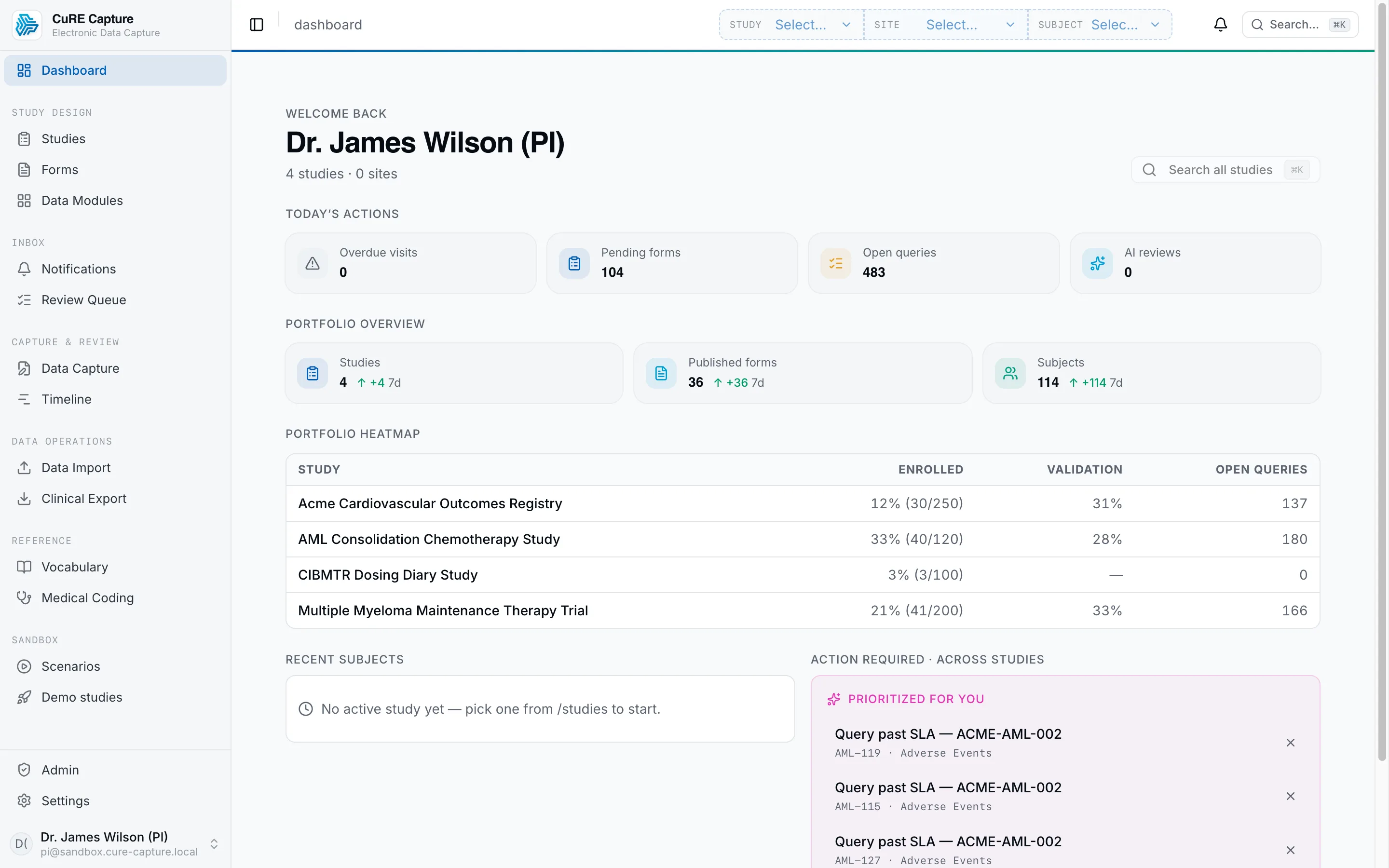
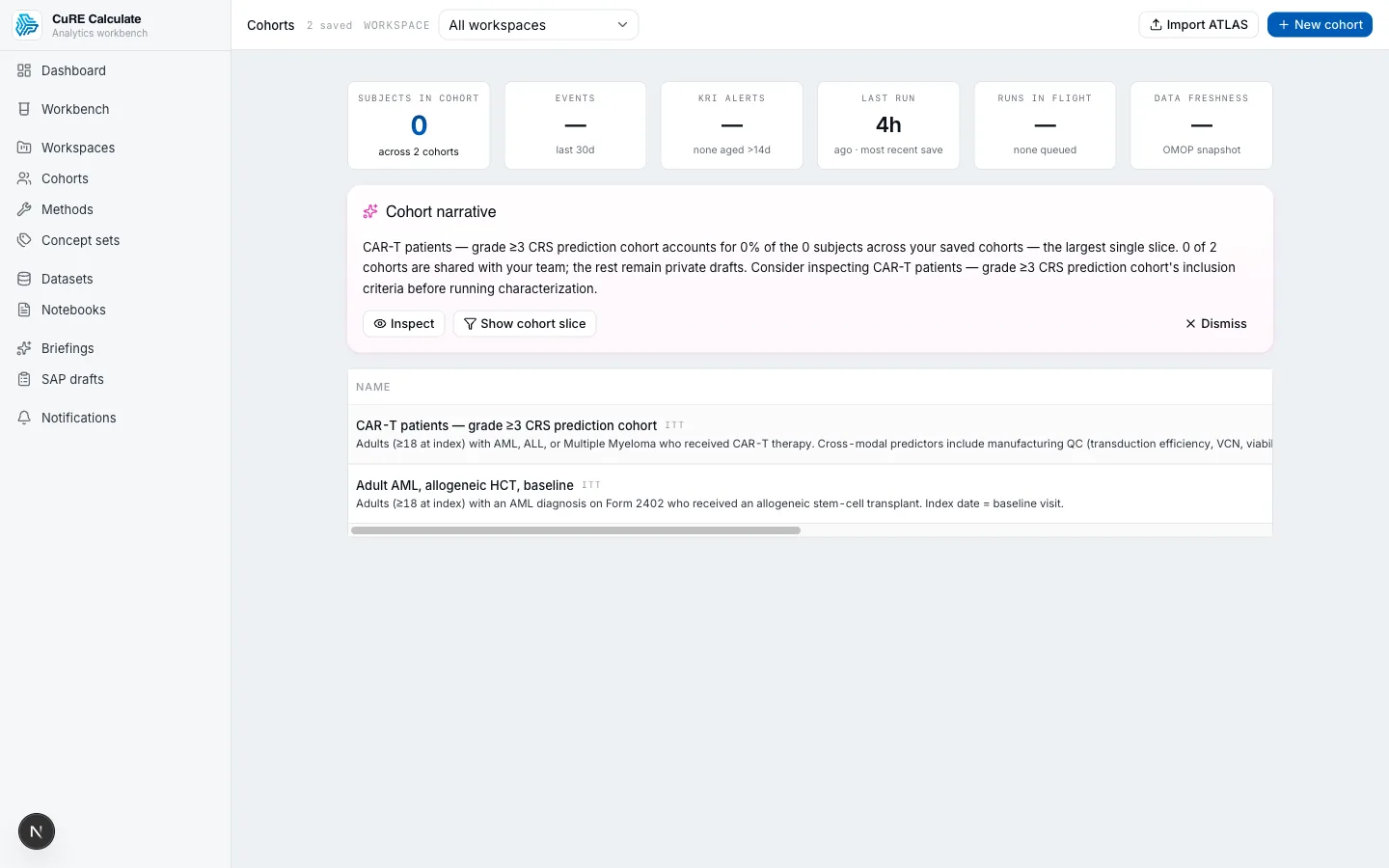
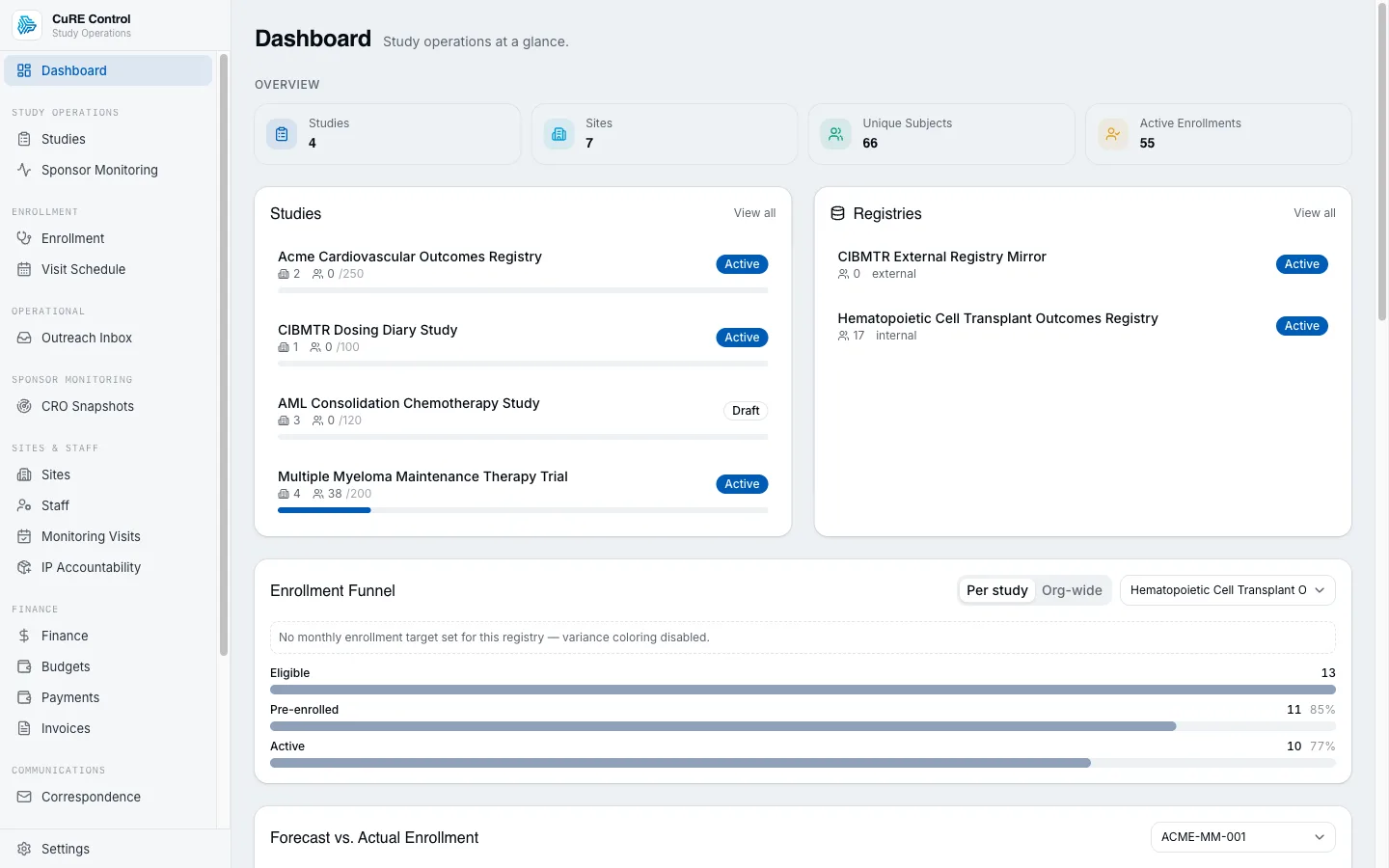
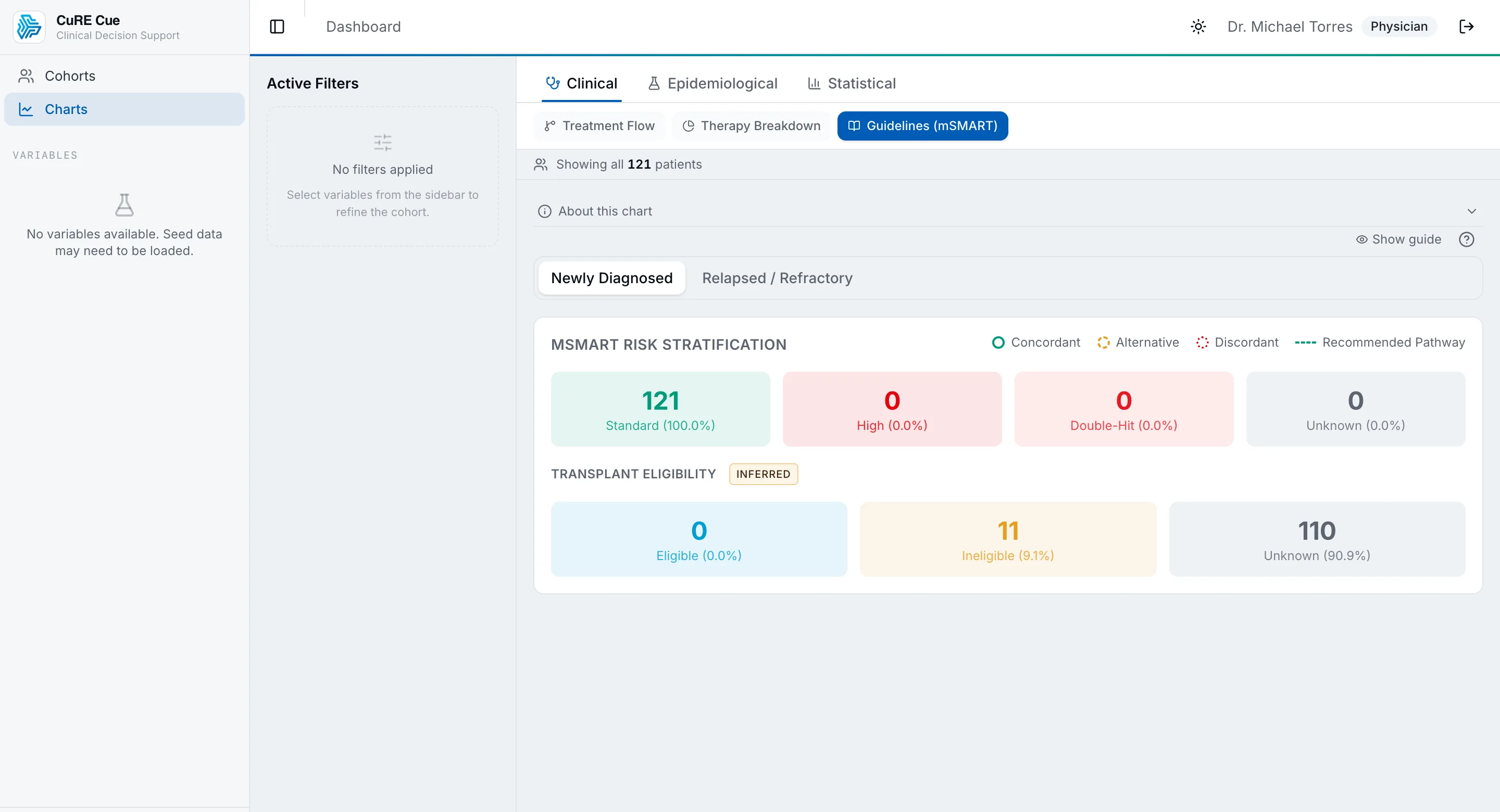
CuRE Capture AI-assisted EDC for outcomes research, with manual entry, NLP, OCR, and SMART-on-FHIR ingestion in one workflow, plus a 21 CFR Part 11 audit trail and AI validation. Coordinators CuRE Compass Mobile-first patient portal for eConsent, ePRO/eCOA, dosing diaries, and disease support. Patients CuRE Calculate Analytics hub — cohorts, characterization, Briefings, self-serve research enclaves, a reproducible methods library, and predictive methods on OMOP-standardized data. Biostats CuRE Cue Clinical decision support embedded in the EHR via SMART on FHIR — point-of-care alerts, guideline recommendations, and outcomes context with visible citations. Physicians CuRE Cascade Randomization and trial supply management (RTSM) on the shared OMOP substrate — block, stratified, biased-coin, and minimization designs, code-break with full audit trail, and supply forecasting. Clinical ops / Biostats CuRE Caliber RBQM — risk-based quality management with centralized statistical monitoring, KRIs, CAPAs, and trust signals for regulated data work. Quality leads CuRE Commons OMOP-native research-engagement marketplace — structured site capability listings, sponsor research-interest publishing, and introduction/match brokering. Sponsors / sites CuRE Canary Pharmacovigilance — AE case management, MedDRA coding, narrative review, E2B(R3) export, and OMOP-native signal detection (PRR/ROR/EB05). PV officers CuRE Cyto Translational toolkit — ISCN karyotype parsing into structured records, integrating with the OMOP foundation. Labs
One governed record across every product OMOP Common Data Model v5.4
Section 02

Five reasons CuRE is different.

Not another EDC with a data lake bolted on. CuRE is built RWD-first, AI-native, and tightly integrated — at a price that does not assume an enterprise budget.

D-01

RWD-native — data first, study second.

Patient and clinical data flow continuously into a governed common data model; studies layer on top of data that already exists. Multi-study, not one-protocol-at-a-time.

D-02

AI-native, with guardrails.

Intelligence is embedded across the platform — AI-assisted capture and validation, NLP/OCR, FHIR→OMOP mapping, decision support. Every suggestion is attributable and human-in-the-loop: confidence, sources, and correction paths, not generative hype.

D-03

Tight integration — one governed record.

One platform, one governed record across all twelve products. No flat-file islands or nightly reconciliation: every event lands on the same shared substrate, so products compose instead of bolting together.

D-04

No enterprise tax.

Exceedingly competitive pricing, friendly to non-profit and academic teams. Enterprise-grade compliance without the enterprise cost or per-seat surprises.

D-05

Fast startup.

Production-ready in weeks, not months. Rapid study build, and amendments are config diffs — not multi-week vendor projects.

Enterprise compliance, without the enterprise tax.

See how the platform fits together
We have spent years watching outcomes research duct-tape trial tools into shapes they were never designed to hold.

Real-world evidence happens in patient journeys.

P-01

Dense, not cramped.

Clinical research is information-rich. The interface earns space with alignment, tabular data, and hierarchy instead of padding everything into sameness.

P-02

Semantic color does real work.

Teal means automated, amber means attention, sky means information, and magenta marks AI-assisted work. Color carries state.

P-03

Context persists.

Study, site, patient, cohort, and time cursor should follow the user across surfaces, pages, and refreshes.

P-04

Provenance is visible.

Every important value should show whether it was entered, ingested, suggested, reviewed, locked, or overridden.

P-05

AI stays attributable.

AI features should expose confidence, source material, and correction paths instead of hiding authorship behind a magic button.

Section 03

One patient record, stitched from every source.

EHRs, labs, registries, claims, patient apps, and cytogenetics map through open standards into one governed record — FHIR on the way in, OMOP as the analytical backbone, submission-grade SDTM/CDASH on the way out.

data flow / sources → standards → governed record → outputs schematic
Sources
EHR / FHIR SMART on FHIR
Lab feeds HL7 · LOINC
Patient PROs Compass
Registries OMOP-mapped
Claims ICD · SNOMED
Cytogenetics ISCN parser
Standards layer
FHIR
EHR connectivity & ingestion
OMOP CDM v5.4
analytical backbone · OHDSI toolkit
SDTM · CDASH
submission-grade outputs
one governed record
Outputs
Cohorts & Briefings Calculate
Signal detection Canary
Quality & KRIs Caliber
Decision support Cue
Randomization & supply Cascade
Study operations Control
standards in · governed record · standards out illustrative schematic / not live telemetry

Section 04 / Try the tech

Karyotypes, parsed in the browser.

CuRE Cyto turns ISCN strings into structured data. Paste a karyotype or choose an example to see chromosome count, sex, abnormality type, breakpoints, and cell counts resolve on the page.

See the full cytogenetics workflow
Try:

Enter an ISCN string above or click an example to see it parsed.

This is a lightweight demo — for full ISCN 2016/2020 parsing, visit cyto.principia.health

Engagement / NMDP

Modernizing a registry without disrupting operations.

NMDP maintains one of the world's most important transplant datasets. Our approach maps donor outcomes data to OMOP in place and adds continuous quality scoring — designed so no operational system has to go offline, and the OHDSI toolkit opens up on top.

Read the case study
OMOP
mapped in place
OHDSI
toolkit unlocked
Continuous
quality scoring
Zero
operational systems disrupted

Talk to Principia

If you have a hard RWE question, we should talk.

We work with non-profits, health systems, and life-sciences organizations on programs ranging from a cytogenetics refresh to a full CuRE network.

Direct line
info@principia.health
Request a conversation

No newsletters. A human reply within two business days.